|
The Freedom to Disappoint That “position of a lifetime” is precisely what allows any justice to disappoint a president. |
| Writing of the judiciary in 1788, Alexander Hamilton said, “Nothing can contribute so much to its firmness and independence as permanency in office.” That much job security may seem like an odd way to hold government accountable, but Hamilton recognized what could happen if keeping a job meant pleasing those who gave it to you. |
| Presidents nominate justices, and the Senate decides whether or not to consent. The Constitution protects a justice’s tenure, and the judicial oath requires a justice to serve impartially under the Constitution and the law. And let’s be clear, it’s alright for a president to criticize a ruling. They cannot fire a justice for delivering it; protections always remain, even if a president believes a decision is terrible. |
| Hamilton used the phrase “improper complaisance” when arguing against periodic appointments, insisting that they might create a willingness to accommodate the branch responsible for a judge’s office. History just keeps proving his understanding of human nature correct, and his arguments sound. |
| In an interview with TIME, published October 1, 2026, President Trump said he regretted nominating conservative Justices Neil Gorsuch, Brett Kavanaugh, and Amy Coney Barrett to the Supreme Court. In the interview, he said, “I gave them the position of a lifetime, and they voted against me too often.” Pressed on whether he wanted loyalty, the President said, “I don’t want loyalty. I want good decisions.” |
| | I gave them the position of a lifetime, and they voted against me too often. PRESIDENT DONALD TRUMP TO TIME, OCTOBER 1, 2026 |
|
| The latter qualification deserves a place alongside the initial complaint. But it raises a question: What does a president believe an appointment entitles him to? After all, Trump is not the first president to complain about a Supreme Court Justice he nominated. (Historical and anecdotal complaints from Madison to Truman and Eisenhower offer examples of disappointed presidents. Many also defied the Courts or threatened to do so, including Jackson, Lincoln, and FDR.) |
|
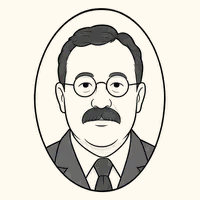
| | 1902 Theodore Roosevelt, for example, appointed Oliver Wendell Holmes, Jr. in 1902. In 1904, Holmes’s dissent in the 1904 Northern Securities case (which upheld a federal antitrust challenge to a railroad merger) was among Roosevelt’s great disappointments. Two years afterward, in private correspondence with Senator Henry Cabot Lodge, Roosevelt described Holmes as a “bitter disappointment,” saying it was the justice’s general attitude more than any single decision or ruling. But six years later, Roosevelt publicly defended his appointment of Holmes and praised him for understanding that Americans should decide for themselves what fundamental justice (expressed in law) ought to mean. It wasn’t a speech focused on praising Holmes or demonstrating some reversal of feeling. His speech contained attacks on other judges, but most significantly, it was a defense of the importance of the independent judiciary, not a complaint about the limitations it created. |
|
| In the case of President Trump, he publicly remarked on his regrets over his Supreme Court appointees and identified specific recent disappointments they’d brought, including decisions on tariffs and birthright citizenship. Though the three justices were grouped together in the comment, they didn’t vote as a bloc. Gorsuch and Barrett helped strike down his tariffs, while Kavanaugh dissented. Barrett and Kavanaugh agreed his citizenship order could not stand. None of the three publicly dissented when the Court kept new postal ballot restrictions on hold in September. |
| Naturally, a president has every reason to care about decisions, and it is entirely reasonable that they might believe justices have read the law incorrectly. President Trump has indicated he wants decisions that serve the country. Realistically, that argument can be examined against a justice’s reasoning, the law, and the consequences Trump identifies in his comments about rulings. |
| But mentioning the position he gave them introduces an entirely different question, albeit a rhetorical one. What bearing does the value of that appointment have on whether his administration acted lawfully? |
| Hamilton warned judges against substituting their will for legal judgment, arguing that it is the people’s authority (through the Constitution) that stands above lawmakers and courts. His aim was not to “pre-accuse,” but instead to support judges in fulfilling duties political pressures could make difficult, and his defense of judicial independence was not meant as carte blanche for the judges. |
| For example, families challenging the citizenship order looked at their children’s legal status, and businesses contesting the tariffs argued that the government was claiming authority to impose them where it may not have existed. Both required courts to consider their arguments without also factoring in the president’s role in choosing the judges. The public has always had a stake in that capability, whether it opposes or approves of a president’s policies. |
| In these cases, as in any, it has to be clear that an adverse vote is not proof of a judge’s impartiality, and their secure tenure does not guarantee a correct decision. What we can take from recent history is that the votes of three justices openly criticized by the president (in one instance, on social media the day after the mail-ballot order ruling) were not identical answers to his administration’s legal claims. The three didn’t act in sync or in full alignment, either. |
| Presidents must respect the limits of their appointments. The public must assess the work of the judges by more than the side or argument that wins. It is the power of an independent judiciary that both creates and ensures these things. |
| Hamilton gave another reason that we must value independent courts: “No man can be sure that he may not be tomorrow the victim of a spirit of injustice, by which he may be a gainer today.” We can’t know when we will need a law’s protections, or when a president will be disappointed when we get those protections. |
| James Madison hinted at this in 1788, writing in the “Federalist No. 51”: “You must first enable the government to control the governed; and in the next place oblige it to control itself.” With a president famous for the phrase “You’re fired,” now might be a good time to give a nod to Hamilton’s insight. That “position of a lifetime” is precisely what allows any justice to disappoint a president. |
Faithfully,  |
P.S. I want to hear your take on this. Hit reply and share your biggest takeaway from today’s issue. (Yes, this goes straight to my inbox.) |
NOTES |
HOW DID WE DO TODAY? |