|
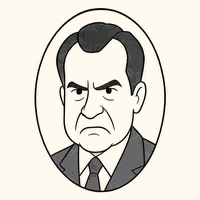
| | 1972 Thirty-one years later, the Nixon White House clearly ignored his warnings when it began to actively and purposefully assemble a list of political opponents. White House counsel John Dean even described their objective of the list in a memorandum, saying they would be using “available federal machinery to screw our political enemies.” The IRS was identified as a preferred tool in their endeavor. In 1972, Dean provided hundreds of names to IRS Commissioner Johnnie Walters, recommending audits for those listed. Walters gave the list to Treasury Secretary George Shultz, whose instructions were simple: Do nothing. He would refuse the recommendation. He also offered to take the responsibility of this refusal off of Walter’s shoulders and onto his own. Both were Nixon appointees. Their efforts prevented the mass audits, but the issue didn’t die there. In July of 1974, it came back to haunt the administration when the House Judiciary Committee’s second article of impeachment against Nixon specifically mentioned efforts to gain confidential tax information and begin discriminatory audits. Nixon’s use of government investigations against political adversaries formed part of the House Judiciary Committee’s case that he had abused presidential power. The committee approved the article, but Nixon resigned before the full House could vote on whether to impeach him. |
|
| Carrying out a president’s wishes matters, but questioning their intent matters more. A demand issued from the White House passes through a series of officials, each with their own responsibilities. Any official along the chain can insist on a lawful purpose for the demand, and as in the case of Walters and Schulz, refusing can expose the president’s intent. Additionally, as the Nixon incident showed, any president is capable of turning their administration into a tool for personal retaliation or gain. |
| And so, we come to October 26, 2026, when a federal judge ruled that the Trump administration had unlawfully fired Maurene Comey. That same day, a new criminal case against her father, former FBI Director James Comey, was made public. |
| This was the latest scene in the ongoing horror show spinning around Comey. It dates back to the 2016 election and the FBI’s investigation into Russian interference that eventually led to his firing in 2017 by Trump. Afterward, as a prominent Trump critic, Comey has faced accusations, investigations, threats of prosecution, and court proceedings. |
| Like an indestructible horror-film character, the administration’s attacks on Comey continue and have spread to the next generation. This part of the saga began in May 2025, when James Comey posted a photograph of seashells arranged as “86 47” on social media. The President and his administration responded by accusing him of threatening the president. Comey denied any violent intention or suggestion. |
| Trump’s ally Laura Loomer, a political activist who had urged the firing of several National Security Council members in April of 2025, demanded on social media that Maurene Comey be fired. Loomer clearly linked her demand to the father’s conduct (the posts later became part of a lawsuit filed by Maurene Comey). |
| On July 16, 2025, the Justice Department fired Maurene Comey without explanation or warning. When she asked interim U.S. Attorney Jay Clayton for an explanation, he said that the decision “came from Washington.” |
| Comey spent nearly a decade prosecuting major cases in Manhattan, including Jeffrey Epstein, Ghislaine Maxwell, and Sean Combs, and received outstanding reviews from supervisors. On September 15, 2025, she filed a lawsuit alleging unlawful dismissal. |
| Only four days later, U.S. Attorney Erik Siebert resigned after reportedly raising concerns about prosecuting Trump’s adversaries, particularly James Comey, whom he allegedly felt he lacked sufficient evidence to pursue. A day later, in a Truth Social post, Trump publicly pressed U.S. Attorney General Pam Bondi to act against James Comey and two others (U.S. Senator Adam Schiff and NY Attorney General Letitia James). At the same time, he praised a former lawyer, Lindsey Halligan. |
| Two days after that, on September 22, 2025, Bondi appointed Halligan as interim U.S. attorney for the Eastern District of Virginia. Three days later, Halligan secured an indictment against Comey for false statements and obstruction of justice. Within a month, Comey’s legal team filed a motion to dismiss the indictment, and on November 24, 2025, U.S. District Judge Cameron McGowan Currie dismissed the indictment without prejudice, ruling that Halligan lacked authority to present the case. The DOJ appealed in December, and the Fourth Circuit heard it in September of this year. |
| In March of 2026, Comey was subpoenaed in Florida for his role in the intelligence assessment of Russian interference in the 2016 election. In April, a grand jury indicted Comey on two counts over the “86 47” photo, with arraignment postponed until January 2027, and his attorneys arguing it was protected speech and that he is being targeted for political reasons. |
| Then came the new charges announced October 26, 2026. They were filed under seal on October 5, and prosecutors filed two Espionage Act charges alleging Comey directed FBI staff to share national defense information with a Times reporter. Comey disputes this, and on October 30, a judge deferred while prosecutors pursued a grand jury indictment. |
| In Maurene Comey's case, “it came from Washington” finally led to a more specific answer. The DOJ admitted that Bondi had directed the firing, and argued that Trump’s authority as president allowed the administration to dismiss without cause. Judge Jesse Furman ruled that prosecutors like Maurene Comey had protections that the attorney general must honor. That meant advance notice and a chance to respond. The judge ordered retroactive reinstatement and back pay through December 20, 2025. Maurene Comey had already taken a new job, leaving only the question of whether she was fired because of her father and/or her perceived politics. The DOJ said it will appeal. |
| The day after she was fired, Comey wrote to many of her colleagues, warning: “If a career prosecutor can be fired without reason, fear may seep into the decision of those who remain.” She understood that her peers might think twice before issuing subpoenas to those with “friends” in Washington. |
| | If a career prosecutor can be fired without reason, fear may seep into the decision of those who remain. MAURENE COMEY, JULY 2025 |
|
| $1B | Her concerns are easily proven valid by her father’s tribulations, but also by news from October 31, 2026. The New York Times reported that day that nine major law firms had collectively pledged nearly $1 billion in free legal work for causes Trump supports. They were all also absent from public efforts to protect the midterm elections from interference. Among the most prominent in this group is the firm Paul Weiss. |
|
| In March of 2025, Trump ordered federal agencies to review government contracts held by the firm and companies that hired it. He lifted the order immediately after the firm agreed to provide $40 million in free legal work for causes Trump supports. Before this, the firm’s chair, Brad Karp, often put lawyers on cases for free when they were needed to help others challenge Trump’s administration in court. Now, many of the organizations that once relied on the firm’s help are left without support at a suspiciously crucial moment - the midterms. |
| We go to scary movies because we know that there is no real danger. We know the guy in the mask, the monster under the bed, or the terror from outer space is just something we’re watching for fun. |
| But in Washington, the horror is not playing out on a screen. Maurene Comey had peers working in the next office, and they watched what happened to her and knew it could happen to them. The same can be said for the other law firms watching what happened to Paul Weiss. And for James Comey, who was doing his job in 2016 and using his constitutional rights in 2025, and who we’re all now watching get crushed under one indictment or subpoena after another. |
| And like a classic horror film, we sit and wonder: who’s next? In the movie theater, we know the scare worked when everyone jumps. In Washington, we know that it works when lawyers and officials decide to stick to their chairs and to sit this one out. |
Faithfully,  |
P.S. I want to hear your take on this. Hit reply and share your biggest takeaway from today’s issue. (Yes, this goes straight to my inbox.) |
NOTES |
HOW DID WE DO TODAY? |